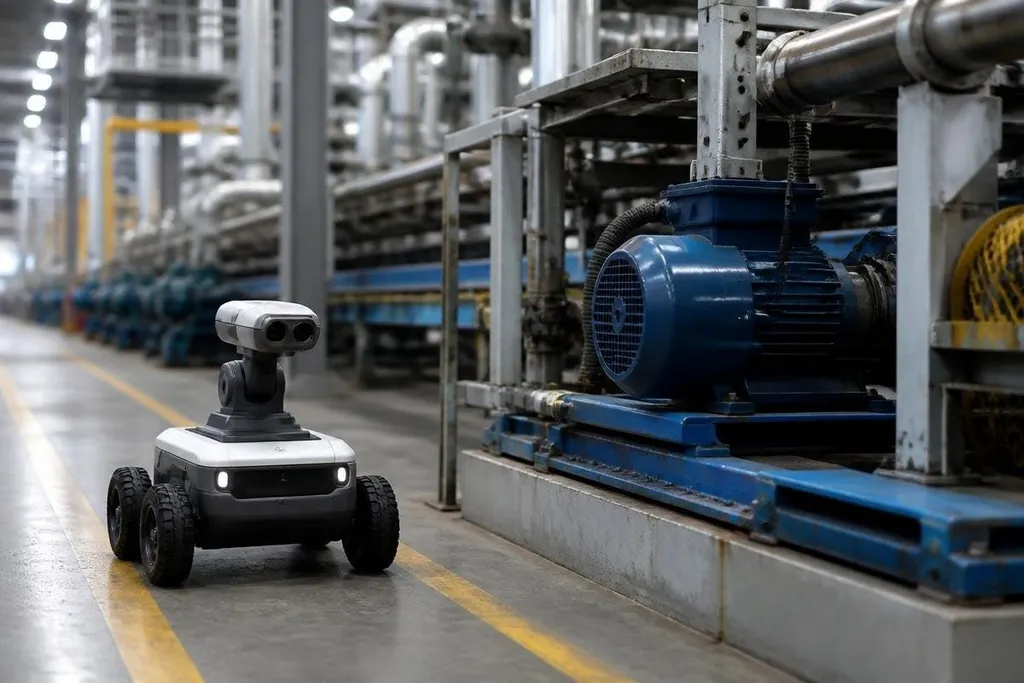
A failed motor can stop a production line long before a technician reaches it. Maintenance robots can watch equipment, collect readings, and find early signs of trouble while the line is still running.
The useful question is not whether a robot can inspect a machine. It is whether the inspection gives your maintenance team enough warning to plan a repair.
Quick read
- Robots can inspect hot, dirty, high, or restricted areas without sending a person first.
- Sensors such as thermal cameras, microphones, and vibration tools can show changes that the eye misses.
- The robot is only useful when its findings reach a maintenance system with a clear next step.
What the robot actually does
A maintenance robot usually moves through a fixed route or travels to a requested location. It may carry a thermal camera, regular camera, microphone, gas sensor, or vibration sensor. Each tool looks for a different sign of equipment wear.
A thermal camera can show a hot bearing or electrical connection. A microphone can pick up an unusual hiss from a valve or air line.
Vibration readings can point to an imbalance, loose part, or damaged bearing. These readings do not repair the fault, but they can tell a technician where to look.
The robot may also compare a new reading with earlier readings from the same machine. That record matters because a single high temperature may have a harmless cause, while a steady rise over several inspections deserves a closer check.
Fixed routes make the work easier to repeat. It can visit the same pump, motor, panel, or conveyor section at set times and collect readings from similar positions. Consistent readings give maintenance staff a better basis for deciding when to inspect or replace a part.
Why earlier warning matters
Planned repairs are easier to fit into a shift than emergency repairs. If a robot finds a hot motor during a scheduled round, a team can check the motor, order a part, and choose a repair window. A sudden failure gives the team fewer choices.
That does not mean every warning should stop a machine. A reading still needs review. Dust, weather, a changed load, or a blocked sensor can affect the result. The robot should point to a problem and show the evidence, while a technician decides what the evidence means.
This is where software matters. The inspection record needs the machine name, location, time, sensor type, and reading. It should also show earlier readings and the limit that triggers a human check. Without that information, a robot can produce a large folder of images that nobody has time to review.
A maintenance robot earns its place when an inspection result leads to repair work. Maintenance robotics reports from Robot24.com can add the machine, site, task, and date behind a reported trial. That record helps you judge whether the system could cut downtime before the plan reaches its failure points.
Where the plan can fail
Blocked routes, poor lighting, water, dust, stairs, or doors that need a person to open them can stop a robot. Wireless coverage can also limit where the robot sends data. These are site problems, not small details to solve after purchase.
Sensor placement matters too. A camera needs a clear view. A vibration sensor needs contact with the right part or a useful reading from a fixed position. Reaching a machine is not enough if the robot cannot collect repeatable readings.
The team also needs a response plan. Someone must review alerts, check the machine, record the result, and close the task. If the alert enters a queue with no owner, downtime may remain unchanged.
Maintenance robots can reduce inspection risk and give teams more regular data. They cannot remove the need for skilled maintenance staff, spare parts, safe access, or a repair plan.
Check the site before buying
Use these points to test whether a project fits your plant:
- Choose the failure first: Name the fault you want to find, such as overheating, air loss, or unusual vibration.
- Map the route: Mark doors, stairs, wet areas, narrow lanes, and places where a person must guide the robot.
- Set the reading standard: Decide where the sensor will point, how often it will collect data, and what starts a human inspection.
- Assign alert ownership: Give one team responsibility for reviewing findings and creating a work order.
- Measure the result: Track missed inspections, planned repairs, emergency stops, and hours of downtime before and after the trial.
I'd skip a project that starts with a robot and searches for a problem afterward. Start with one failure that costs time, collect repeatable readings, and check whether the warning arrives early enough to change the repair.
The next decision is practical: can your team act on the robot's data during the same shift? If the answer is no, better sensors will not fix the downtime process.